Expert in Risk and Crisis Communication | Leveraging 40+ Years in Media and Government for Effective Resilience Strategies
Political Dynamite: Quebec’s Plan To Ban Prayers In The Streets
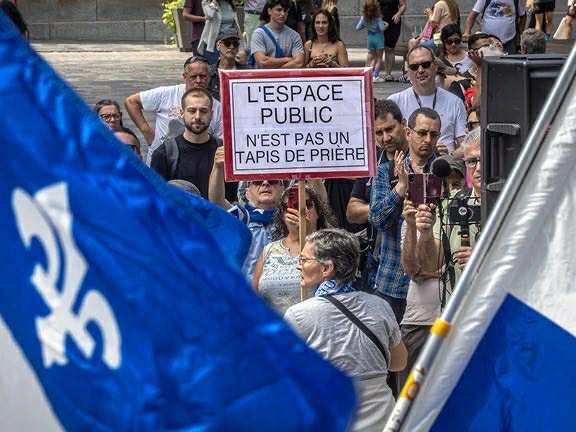
Quebec’s Coalition Avenir Québec government just announced legislation to ban public prayer – a move that’s igniting fierce debate across Canada.
What’s happening:
Premier François Legault’s government plans to table a bill this fall prohibiting street prayers, following months of tension over Muslim prayers during pro-Palestinian demonstrations, particularly outside Montreal’s Notre-Dame Basilica.
Secularism Minister Jean-François Roberge called the “proliferation of street prayer” a “serious and sensitive issue,” but provided no enforcement details. The government hasn’t ruled out using the notwithstanding clause to override Charter rights.
The political calculus:
With the CAQ trailing in polls and losing three consecutive byelections, critics argue this is political opportunism. Former senator André Pratte accused the government of “exploiting fear of Muslims” to regain support, noting: “It’s not prayers in public places that are disturbing… it’s Muslims who pray.”
Complex reactions:
• The Parti Québécois supports exploring a ban, calling public prayers “appropriation of public space by religious fundamentalists” • Catholic bishops worry about disrupting traditional processions like Good Friday’s Way of the Cross. • Civil liberties groups call it a “clear infringement” on religious freedom. • The Centre for Israel and Jewish Affairs supports action against prayers that “block public spaces”.
The bigger picture:
This extends Quebec’s secularism agenda beyond workplace religious symbols to public expression itself.
An independent committee’s 300-page report actually recommended leaving this to municipalities, suggesting even secularism advocates see risks in provincial overreach.
Questions ahead:
How do you legislate against prayer without targeting specific communities? What about yoga in parks, papal visits, or silent personal prayer? Where does religious freedom end and public order begin?
This isn’t just about Quebec – it’s a test case for how diverse democracies balance religious expression, public space, and political expediency.


Quebec’s Coalition Avenir Québec government just announced legislation to ban public prayer – a move that’s igniting fierce debate across Canada.
What’s happening:
Premier François Legault’s government plans to table a bill this fall prohibiting street prayers, following months of tension over Muslim prayers during pro-Palestinian demonstrations, particularly outside Montreal’s Notre-Dame Basilica.
Secularism Minister Jean-François Roberge called the “proliferation of street prayer” a “serious and sensitive issue,” but provided no enforcement details. The government hasn’t ruled out using the notwithstanding clause to override Charter rights.
The political calculus:
With the CAQ trailing in polls and losing three consecutive byelections, critics argue this is political opportunism. Former senator André Pratte accused the government of “exploiting fear of Muslims” to regain support, noting: “It’s not prayers in public places that are disturbing… it’s Muslims who pray.”
Complex reactions:
• The Parti Québécois supports exploring a ban, calling public prayers “appropriation of public space by religious fundamentalists”
• Catholic bishops worry about disrupting traditional processions like Good Friday’s Way of the Cross.
• Civil liberties groups call it a “clear infringement” on religious freedom.
• The Centre for Israel and Jewish Affairs supports action against prayers that “block public spaces”.
The bigger picture:
This extends Quebec’s secularism agenda beyond workplace religious symbols to public expression itself.
An independent committee’s 300-page report actually recommended leaving this to municipalities, suggesting even secularism advocates see risks in provincial overreach.
Questions ahead:
How do you legislate against prayer without targeting specific communities? What about yoga in parks, papal visits, or silent personal prayer?
Where does religious freedom end and public order begin?
This isn’t just about Quebec – it’s a test case for how diverse democracies balance religious expression, public space, and political expediency.
What’s your take?
(Sources: Canadian Press, CBC News)
#Quebec #ReligiousFreedom #PublicPolicy #Charter #Politics #Secularism